The Myth Machine Is Running Again
Every November, the same storylines crawl out of group chats. Golden State cannot cover a short number at home. The Clippers are a live underdog because of their bench. Night games on a Monday in Manila always go over. If you have been betting the NBA long enough, you know that half of these lines are folklore passed down by people who never once opened a closing-line chart.
Tonight's board, per the table below, is unusually tight: the Warriors are priced at GS -1.5, with the total sitting at 220.5. A 1.5-point spread is the market's way of saying these two rosters are close to level on neutral ground, and home court is worth roughly the difference. That is not a ringing endorsement of the Warriors — it is a warning that anyone treating this as a layup is reading the line wrong.
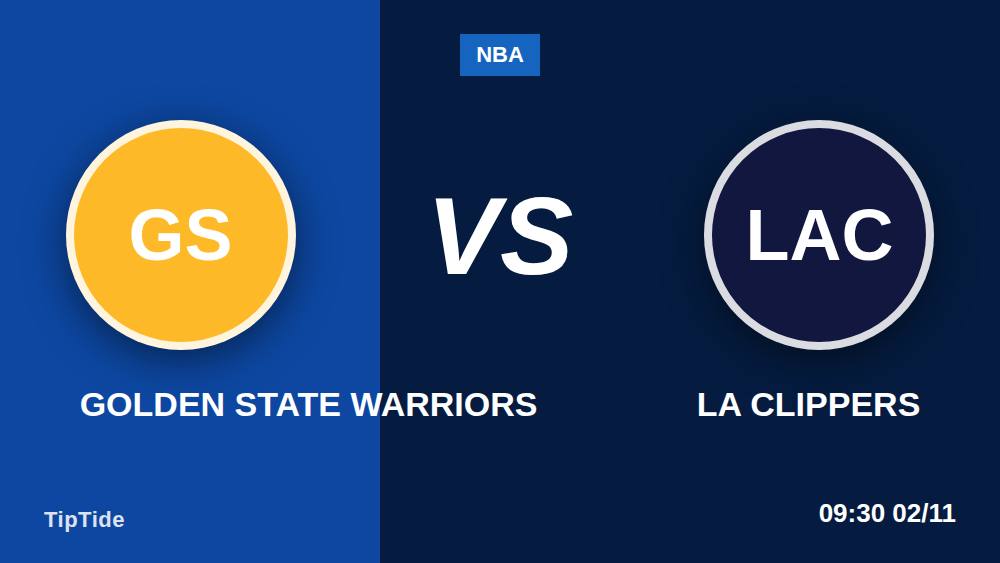
So let us take the four loudest myths attached to this fixture and put them through the wringer. The venue is Chase Center, tip-off is 01:30 UTC on 2 November 2026 — that is 9:30 a.m. Philippine time on a Monday, which matters more than people think for how the game gets bet locally.
| Info | Detail |
|---|---|
| Competition | NBA |
| Kick-off | 09:30 02/11/2026 (GMT+8) |
| Venue | Chase Center |
| Golden State Warriors form | - |
| LA Clippers form | - |
| Reference odds | GS -1.5 |
| Over/Under | 220.5 |
Myth One: Chase Center Is a Fortress Where Favourites Cruise
The most persistent myth is that Golden State at home in a short spread is free money. It is a comfortable story because the building is loud, the travel is brutal for visitors, and the Warriors' system depends on the crowd's energy in the third quarter. But a -1.5 line tells you the bookmakers have already priced all of that in and still see this as a coin-flip game with a nudge.
Here is the practical betting takeaway: a 1.5-point favourite wins the game outright far less often than casual bettors assume once you account for late-game fouling and clock management. When a game stays within one possession in the final two minutes, the trailing team starts fouling, free throws pile up, and the favourite that was up four suddenly wins by two — or by six. That variance is exactly why books keep short spreads short. They are not handing you a discount; they are charging you for the illusion of safety.
If you are playing the Warriors on the spread, understand you are betting on a team that the market rates as barely better than its opponent on its own floor. The fair price for that in a standard two-way market sits around -105 to -110 for both sides, which at a Philippine sportsbook translating to decimal odds lands near 1.91 to 1.95. If the book you use is showing 1.87 on Golden State and 1.95 on the Clippers, the vig has quietly tilted against you and the value is on the other side of the counter.
Myth Two: The Clippers Are a Safe Underdog Because of Depth
Depth is real, but depth is a regular-season asset, not a single-game edge you can price blindly. The Clippers' rotation advantage shows up in back-to-backs and long road trips, not in one game where both teams have had time to rest. A 1.5-point underdog is the market's way of saying the Clippers' depth is worth about one basket relative to Golden State's home-court advantage. Nothing more.
Where the underdog angle genuinely pays is in the moneyline. At a 1.5-point spread, the Clippers' moneyline typically prices somewhere between 1.85 and 1.95 in decimal terms, which means the market gives them close to a 50 percent chance of winning outright. If your own read says the Clippers match up well against Golden State's switching defence, the moneyline is the honest way to express that. Taking the points is insurance; taking the moneyline is conviction. Do not buy insurance you do not need.
Shop the board before you shop the team. A 0.5-point spread difference between two books on a game this tight is worth more than any hot take you will read on social media today.
Myth Three: Low Totals Mean Ugly, Slow Basketball
The 220.5 total has triggered a wave of "this will be a grind" predictions. A total in the low 220s is not a verdict on pace — it is an estimate of combined efficiency. Two teams that play fast but shoot poorly from three can land on the same number as two teams that walk the ball up and convert everything. The number tells you the expected output, not the style.
What does matter for the total is the free-throw and three-point variance. If both teams are healthy and neither is on the second night of a back-to-back, a total in the 220s is a fair reflection of two competent offences. If you lean over, you are betting on pace and shot-making holding up for 48 minutes. If you lean under, you are betting on the game staying half-court and physical. The line itself gives you no edge either way — the edge comes from your read on how these specific rosters match up at Chase Center tonight.
For live bettors, the more useful number is the quarter line. First-quarter totals in a game like this typically open around 55 to 56. If the first six minutes go cold, the in-play total will drop faster than the underlying pace justifies, and that is where the real over value shows up. Chase the number, not the narrative.
What the Table Is Actually Telling You
The table above lays out the fixture cleanly: Golden State at home, the Clippers on the road, a GS -1.5 spread, and a 220.5 total. Read it as a statement of uncertainty, not a prediction. The market has no strong opinion about who wins this game, and neither should you pretend to. What the market does have is a firmly held view that the margin and the scoring will both be compact.
Two habits separate the bettors who grind out a season from the ones who reload every fortnight. First, they never take a short spread without checking the moneyline equivalent. A -1.5 spread at 1.91 and a moneyline at roughly 1.77 for the same team are not the same bet, and pricing them against each other tells you which side the book is shading. Second, they set a unit size before tip-off and do not touch it at 3 a.m. The game tips at 9:30 a.m. Manila time, which is actually a gift — you are making decisions with coffee, not with adrenaline.
Bankroll Mechanics for This Board
Since this is a Monday morning game for Philippine bettors, it is worth restating the boring but decisive details. Reputable local operators run under PAGCOR licensing, and the ones worth your time process e-wallet withdrawals in 15 minutes to 2 hours, with bank transfers landing inside one business day. Minimum deposits sit at PHP 200 to PHP 500 on most platforms, and the standard welcome offer is a 100 percent match up to PHP 5,000 with a 5x rollover on the bonus, which is a fair requirement, not a predatory one.
VIP structures follow a predictable ladder: Silver at PHP 50,000 in monthly turnover, Gold at PHP 250,000, Platinum at PHP 1,000,000. Each tier buys you faster cash-outs and better odds boosts, but the real value is the reduced juice on marquee NBA games. If you are betting this slate every week, a Platinum-tier account returning 2 percent cashback on NBA markets beats chasing deposit bonuses every month. On a game like this, where the spread is 1.5 and every point of vig counts, reduced juice is the whole game.
One practical note on wagering requirements: bonus funds usually carry a 5x to 8x rollover with a 1.50 minimum-odds clause. A -1.5 spread at 1.91 clears that comfortably, but a low-odds parlay leg does not. If you are working off a bonus, keep this single-game spread as your qualifying bet and leave the parlays for your cash balance.
The Fact-Based Play
Strip away the myths and this is a near pick'em between two teams the market rates almost identically, played on a floor that gives Golden State a basket's worth of edge. The Warriors at -1.5 are only worth backing if you genuinely believe in a multi-possession win, because the spread has no cushion. The Clippers moneyline is the cleanest expression of a contrarian read. And the 220.5 total is a number to attack in-play, not before tip-off, when quarter lines give you a much better price on your read.
Bet your unit, check the closing line the next morning, and log it. Over a season, the bettors who track closing-line value on games like this one out-earn the ones who chase narratives every Monday. The board has spoken: this is a tight game. Your job is to find where the book disagrees with the truth, not to argue with the number itself.